

MA2-Flexures: Origins and Kinematic Perspectives
Dr. Stuart T. Smith (University of North Carolina-Charlotte)
Dr. Marijn Nijenhuis (University of Twente)
Dr. Kumar Arumugam (NIST)
Monday, October 26, 2026 (1:30 PM – 5:30 PM)
The advantageous exploitation of the flexural response of materials to applied loads gained a scientific foundation with early metrology standards instruments and fluxure mechanisms now permeate many of today’s most advanced precision technologies. This tutorial focuses on the origins of these instruments and modern methods for the evaluation of mechanism designs from a kinematic perspective. The main focus of this introductory tutorial is to highlight the uses of flexures to produce precision mechanisms for force and displacement guidance applications. In very early applications, flexure designs were frequently reported only incidentally with little analytic or conceptual justification. However, it is worth reviewing these designs to both highlight original applications and to understand the origins of mechanisms commonly used today.
By comparison, generalized methods for evaluating kinematics of flexure mechanisms is a relatively recent focus. These methods include; mobility analysis, loop analysis, modal analysis, Blanding’s exact constraint approach (a precursor to the more comprehensive Freedom and Constraint Topology (FACT) of Dr. Hopkins), and matrix methods (null-space and singular value decomposition (SVD)). Conceptual outlines of these methods will be presented with discussion of both 2D and 3D applications. To conclude, there will be an interactive exercise using constraint analysis software to consolidate the concepts presented in the tutorial.
You will learn about the following:
- Perspective on flexure mechanism origins and early applications.
- Examples of flexure mechanisms for precision applications.
- Useful applications of various flexure arrangements.
- Methods for evaluating flexure design kinematics.
- Various examples of flexure applications to spur new ideas for designs.
- A Null space/SVD based software tool for constraint analysis and there interpretation
Prerequisites
The focus of this tutorial is on the synthesis and kinematic evaluation methods for flexure mechanism design. Understanding these approaches will require undergraduate level of mathematics, familiarity with flexure elements and mechanisms, and sensor and actuator principles.
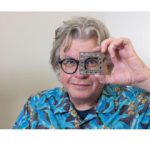
Dr. Stuart Smith is a professor at the University of North Carolina at Charlotte with over 45 years of experience in Precision Engineering. His major focus has been the development of instrumentation and sensor technologies, including advanced signal processing techniques, for measurement of surface profile, micro-geometry, and displacements, primarily aimed towards the challenges of atomic scale discrimination and modifications. Development of these systems has required the innovation of many high bandwidth, precision positioning, sensing, and process control systems primarily involving flexure mechanism design. Current interests include the integration of multi-sensing methods, micrometer level assembly, CT metrology, optical and electronic modulation processes, and precision mechatronics.
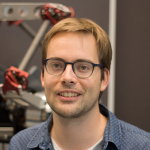
Dr. Marijn Nijenhuis is an Assistant Professor in the Precision Engineering group at the University of Twente. His research focuses on the analytical and numerical modeling of mechanical systems for the purpose of design and control. His research interests include flexible multibody dynamics and (electro)mechanical metamaterials. He earned his doctorate in 2019 from the University of Twente with a specialization in the nonlinear analysis of flexure mechanisms.
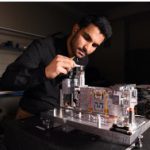
Dr. Kumar Arumugam is a Research Associate at the National Institute of Standards and Technology (NIST), where he develops precision measurement systems based on tabletop Kibble balances for SI-traceable mass and force metrology. His research focuses on precision mechanism design, flexure systems, electromagnetic and electrostatic force realization. He received his Ph.D. in Mechanical Engineering from the University of
North Carolina at Charlotte in 2021, where his research centered on developing and characterizing interferometric, confocal, and stylus profilometric surface topography measurement instruments.