

2026 Student Challenge
Developing a Nanoindentation System
Take on the challenge of designing a precision instrument to quantify material properties at the nanometer scale.
The Challenge
Build an instrument that measures the properties of real materials.
Teams design, assemble, and characterize a working nanoindentation system — integrating force sensing, displacement metrology, and a diamond indenter to extract quantitative material properties under a rigorous uncertainty budget.
Participants Will
01
Design and assemble a flexure-based load cell for millinewton-level force measurement.
02
Use a precision capacitance probe for nanometer-scale displacement sensing.
03
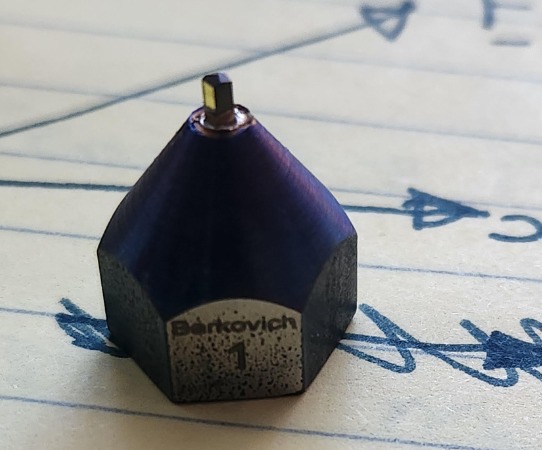
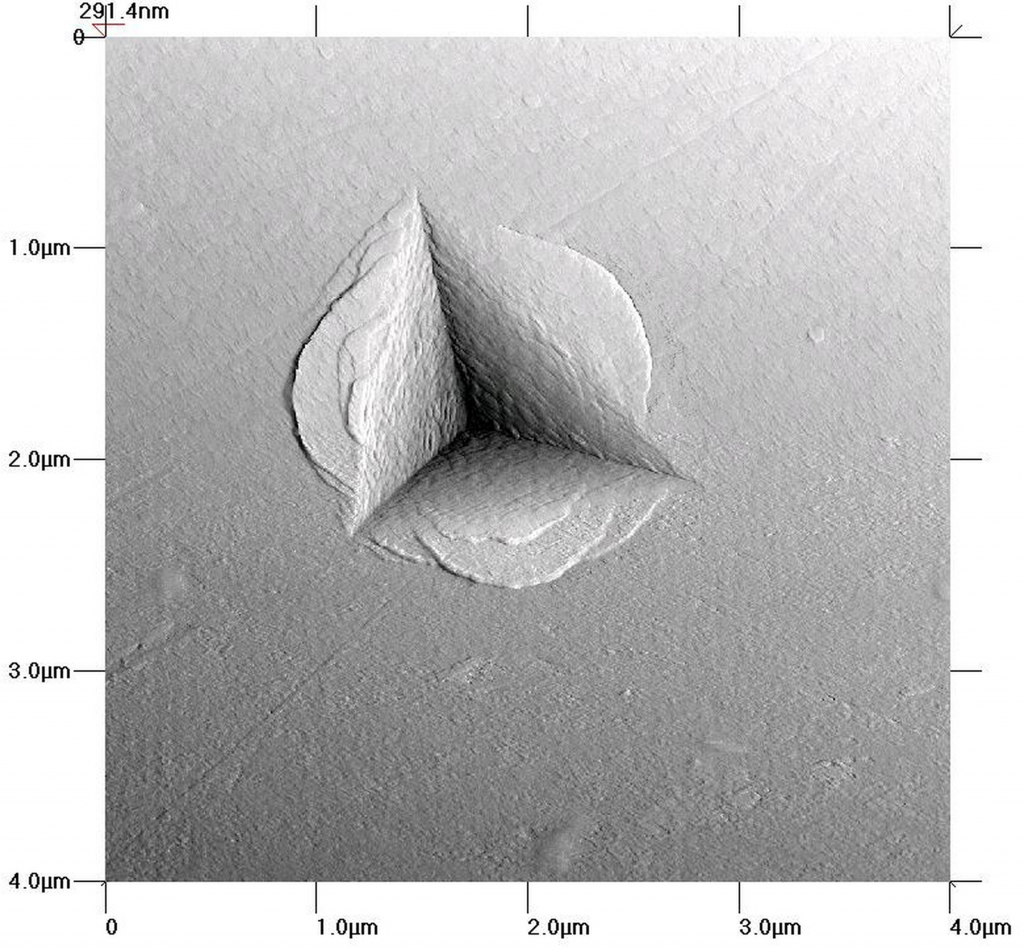
Integrate a Berkovich indenter to perform nanoindentation experiments and quantify material properties (Edge Technologies).
This Challenge Is Designed To
Precision mechanism design
Deepen your understanding of how mechanisms achieve repeatable, low-error motion.
Metrology & uncertainty
Apply principles of measurement science and rigorous uncertainty evaluation.
Sensors & control
Develop hands-on experience in sensor integration and feedback control.
Calendar (subject to change)
| Aug 24 | Team Registration Deadline — 11:59 PM Local |
| Sep 15 | Challenge begins. |
| Oct 5 | Preliminary Presentation — 5:30–7:30 PM EDT |
| Oct 23 | Up-to-date Uncertainty Budget Submission — 11:59 PM Local |
| Oct 26 | Competition at the conference — 6:00–11:59 PM Local |
| Oct 28 | Presentations at the conference — Noon–1:30 PM Local |
Sponsorship
Become an ASPE Annual Meeting Sponsor
Sponsorships provide exciting opportunities to engage with attendees at ASPE’s Annual Meeting — including exposure, branding, and direct interaction with students and professionals in the Precision Engineering fields.
FAQ
Frequently Asked Questions
01. How many hours is each student from a team likely to spend on the project before the conference?
20 to 40 hours, based on the skillset required.
02. What are the background skills needed?
LabVIEW programming, wiring, data analysis, flexure design, apparatus fabrication, and team collaboration.
03. What is the required level of education in order to attend?
Currently registered graduate and undergraduate students in a STEM field.
04. What is the size of a team?
Minimum of 3, maximum of 5. We can solicit collaboration between teams from different institutes if fewer than three members want to participate.
05. How many members from a team should be present in person at the conference?
A minimum of 3 team members.
06. Who can be a team advisor?
A faculty member from their institute. Failing that, the organizing committee can arrange for one.
07. Who should I reach out to with questions?
Email the organizing committee at aspe.challengecommittee@gmail.com. We can also meet via Zoom to address any hardware- or software-related questions.
Ready to take on the challenge?
Register your team and compete at the 2026 ASPE Annual Meeting.